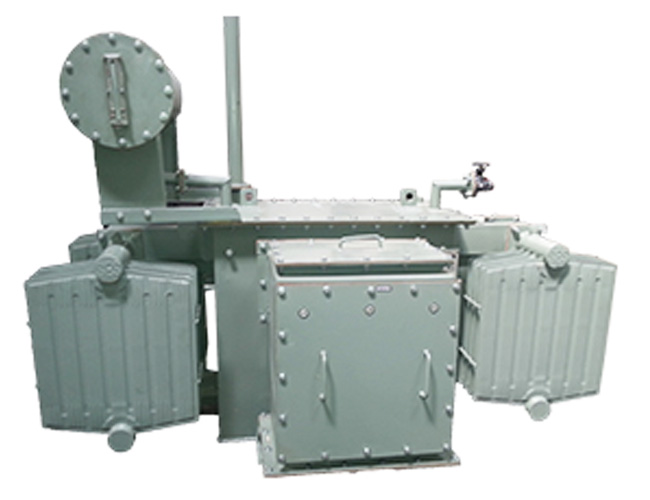
Solar/Wind Transformers
Email: info@skptransformers.com, skptrans@gmail.com OR Call: (02764) 286342, 9825807906, 9824646408

Solar/Wind Transformer is mean for converting the low voltage into high voltage and fed into a power grid. The transformers are converter duty and design to resist harmonic current caused by Rectifier/Inverter. The transformers are design for multi winding to make 6 – Pulses to 12 – Pulses transformer. Copper static shield provided between primary and secondary to protect transformer against disturbance.
We manufacture any type of special duty transformer as per customer requirements. The details of special transformers manufacture by us are as follows:
We manufacture transformer up to 100% impedance for ONGC Ltd. And Gas Filled Areas.
We manufacture HV Testing transformer up to oil cooled 100KV
We manufacture special duty low voltage high current transformer up to 8000 Amp.
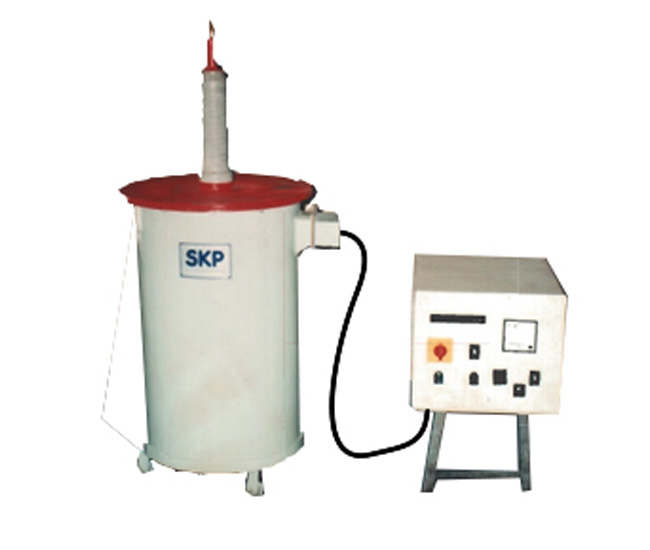
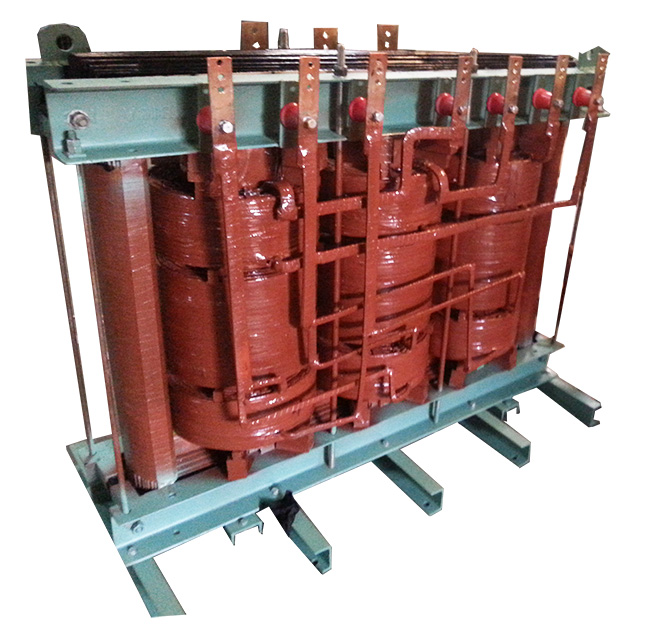
We manufacture Dry Type Transformers up to 3.3KV with both resin cast & VPI System as per IS:11171 & IS:2026. Dry type transformer reduces maintenance costs and installation space.
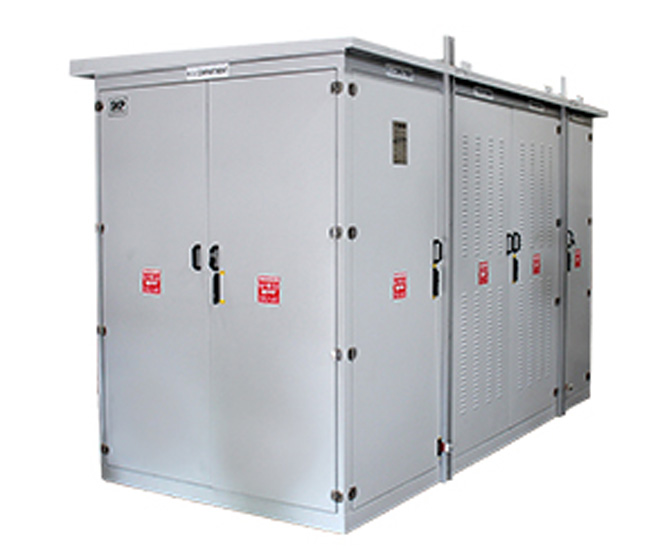
We manufacture CSS (Compact Sub Station) as per customer requirement. CSS consist and enclosure containing VCB/LBS, transformer, low voltage switchgear, connections and auxiliary equipments to supply low voltage power from high voltage system. CSS are design for Indoor/Outdoor applications. CSS reduces space, construction requirements, cable costs, transmission losses and installation costs.
Furnace Transformers are design for induction melting and induction heating for ferrous and non ferrous metal. We manufacture furnace transformers of different make furnace manufacturer with output voltage 415V, 460V, 575V, 850V, 1000V with 6 – Pulse and 12 – Pulse converter as per furnace requirement.
Electrostatic Shielding are provided between primary and secondary windings for protection of rectified elements against voltage surges in primary side windings.
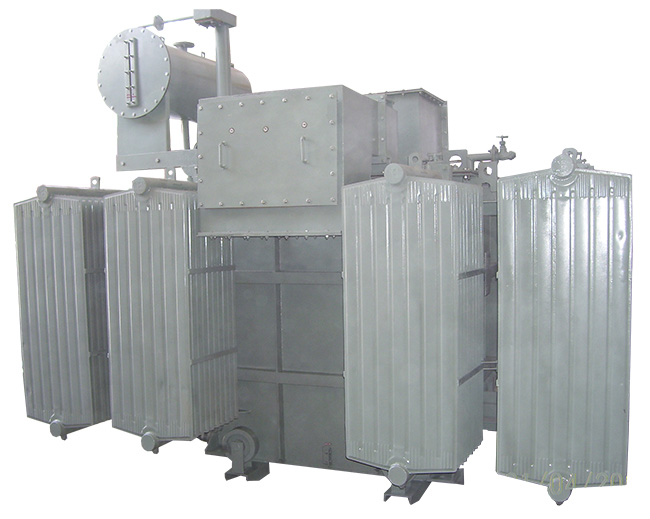
A Distribution Transformer is a Transformer that provides the final voltage transformation in electrical power distribution system, stepping down the voltage used in the distribution lines to the level used by the customers. The level of Primary Line voltages are 3.3KV, 6.6KV, 11KV, 22KV and 33KV in India and also 10KV, 20KV in abroad. The secondary voltages are 415V/433V.
We manufacture distribution transformers as per IS:1180 (Part – 1, 2014) up to 2500 KVA and IS:2026 for rating above 2500 KVA in India and IEC-76 for exports.
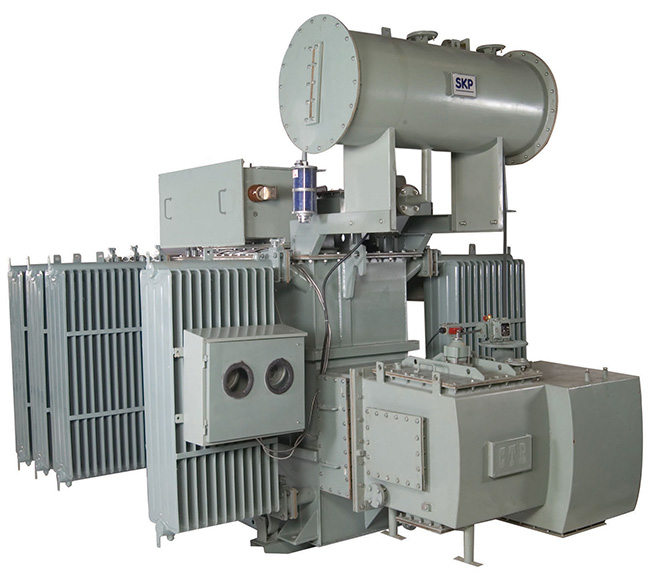
As per IS:2026 and IEC 60076 Part-1, Power transformer is defined as a static piece of apparatus with two or more windings which, by electromagnetic induction, transforms a system of alternating voltage and current into another system of voltage and current usually of different values and at the same frequency for the purpose of transmitting electrical power. Power Transformers can alter from one voltage to another at high power levels. It is used in Transmission grid to step down voltage from higher voltage levels to lower voltage levels.
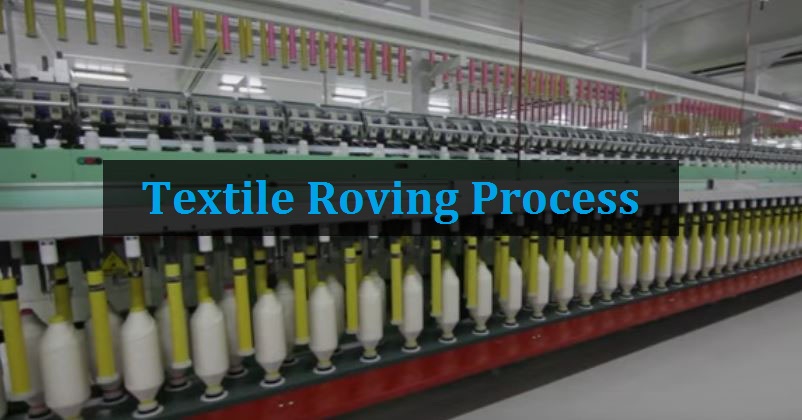
Silver obtained from draw frame if further processed in roving frame. Roving process is the last second stage of spinning process conducted after blow room, carding, combining, drawing and prior to cone winding. Overall, the roving operation in textile manufacturing process focuses in decreasing the density of silver from draw frame by draft. After the reduction of linear density this silver is transferred to roving where fibers become suitable for spinning. Roving process can be stated as an initial step where twist is inserted for producing yarn in spinning mills.
To attain the good quality of yarn it is difficult to apply draft on silver in a single step. There comes the requirement of better strand wound on smaller packages which can be attained by roving operation as a result silver cans occupy lager spaces as compared to ring spinning frame. Silver is broad and strand which is untwisted which would result into more hair when converting into yarn by drafting. Contrarily, roving are appropriate having twist so that it does not produce any hair during the operation. Roving frames are generally named as speed frames, flyer frames and simplex machines.
Roving frame:
Roving frames carry the process of converting fibers into low twist lea. As mentioned the silver attained from drawing is thick and less suitable for manufacturing the yarn. The purpose of roving frame is to prepare the input package for the further process which is to be prepared on small compact package called bobbins. The roving procedure is complicated, creating various faults, defects, and additional production costs. Draft is needed to lessen the linear density of silver and to stop the creation of hair and fly in the production ring frames are utilized.
Objectives of ring frames:
Attenuation of drawn sliver to conduct roving by drafting.
Insert required twist to allot required strength.
Wind the twisted roving on the bobbin.
Connect roving in bobbin which facilitates handling, withdrawing and shift to further process.
Operations conducted by ring frames:
Following are some of the operations conducted by ring frames:
Creeling: This is carried to supply the silver obtained by driver rollers. It includes creel stop motion, creel draft and block creeling.
Drafting: Drafting is conducted by drafting system. It focuses to lessen the length of silver, making it appropriate for ring spinning.
Twisting: Twisting is a significant factor which generates strength in roving. Twist is inserted by flyer i.e. when flyer rotates it produces twist in silver.
Laying: Laying is the process of arranging the roving coils wound around the bobbin. Laying operation is mainly conducted to apply coils of roving side by side in a uniform manner with required space arrangement.
Winding: By winding roving is drawn from front roll through flyer and on the bobbin. It aims to wind layers of robin by providing required speed.
Building: It is held to build the roving in bobbin to facilitate withdrawing, handling and transfer for further process.
Doffing: It is carried to conduct replacement of empty bobbin by full roving bobbin. This is an optional function of speed frame which can be done manually or automatically.
Flaws and its prevention in roving:
There is possibility of defects occurring in the process of roving and therefore here are some of the points focusing on defects and its required prevention’s:
Roving tension: roving tension is a defect directly occurring from the machine. This defect depends on the delivery rate and difference of flyer speed and bobbin. To prevention of the same we must keep the delivery length and speed difference consistent.
Inappropriate handling of material: roving material is very sensitive from quality point of view. The handling of material should be in such a way that fine dust does not affect material. It is required to use afresh material for the further process. If material is stored for longer period of time it will create variation.
Roving breakage: This defect arises due to lack of maintenance. To maintain and improve the quality of material it is mandatory to conduct the technical maintenance. To stop the breakage problem, the speed of machine, trained operator and proper management must be considered.
The above information provides clearance of the roving section held in spinning process in textile manufacturing process. This roving process has a major role of ring frames used into it. Roving is followed by cone winding process which the concluding stage of spinning process.